
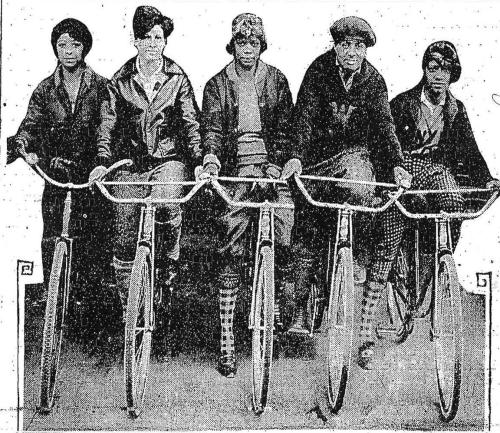
Celebrating Women’s History Month by remembering the riders who claimed the road in 1928
In the spring of 1928, when most people were minding their Easter best and keeping to familiar routines, five young Black women in New York decided the weekend was better spent on bicycles, heading south. No fanfare, no escort, no modern conveniences — just sandwiches, determination, and the sort of quiet audacity that tends to unsettle the status quo. They rolled out of Harlem at six in the morning, steel frames beneath them and a long, uncertain road ahead. It wasn’t glamorous. It wasn’t comfortable. But it was theirs.
Their names — Leolya Nelson, Constance White, Ethyl Miller, Marylou Jackson, and Velva Jackson — read like a roll call of women who already had full lives: teaching, studying, nursing, leading. They weren’t chasing medals or headlines. They simply believed they had every right to move through the world on their own terms, even when the world insisted otherwise. And make no mistake, 1928 was not a gentle time for Black women on the road — long before The Green Book existed to help Black travelers navigate hostile terrain. Mobility was policed, dignity was conditional, and the wrong stop could turn dangerous quickly. Yet these five women crossed state lines with a kind of steady, unbothered resolve. They rode because they wanted to. That alone was radical.
Their journey wasn’t just a physical feat — though cycling 250 miles on heavy bikes would humble most of us today. It was a declaration. A refusal to shrink. A reminder that freedom is often claimed long before it is granted. They reached Washington, D.C. late on Easter Sunday, tired but triumphant, and spent the next morning wandering the capital as if arriving there by bicycle were the most natural thing in the world.
Nearly a century later, their ride still hums beneath the work we do at Happy Chaos Bike Lab. As a Black‑owned nonprofit in Los Angeles centering mobility justice for Black [and brown] youth, we’re not simply teaching kids to ride. We’re teaching them that movement is theirs — their right, their joy, their inheritance. Every time a young person in South LA learns to fix a flat or take the lane with a bit more confidence, they’re tapping into the same current that carried the Pearls down the Eastern seaboard. Different city, different century, same insistence on freedom. Same belief that the road, in all its chaos and possibility, belongs to us.